Own product · Creative tool · Web app
Kymatic: music
turned into geometry
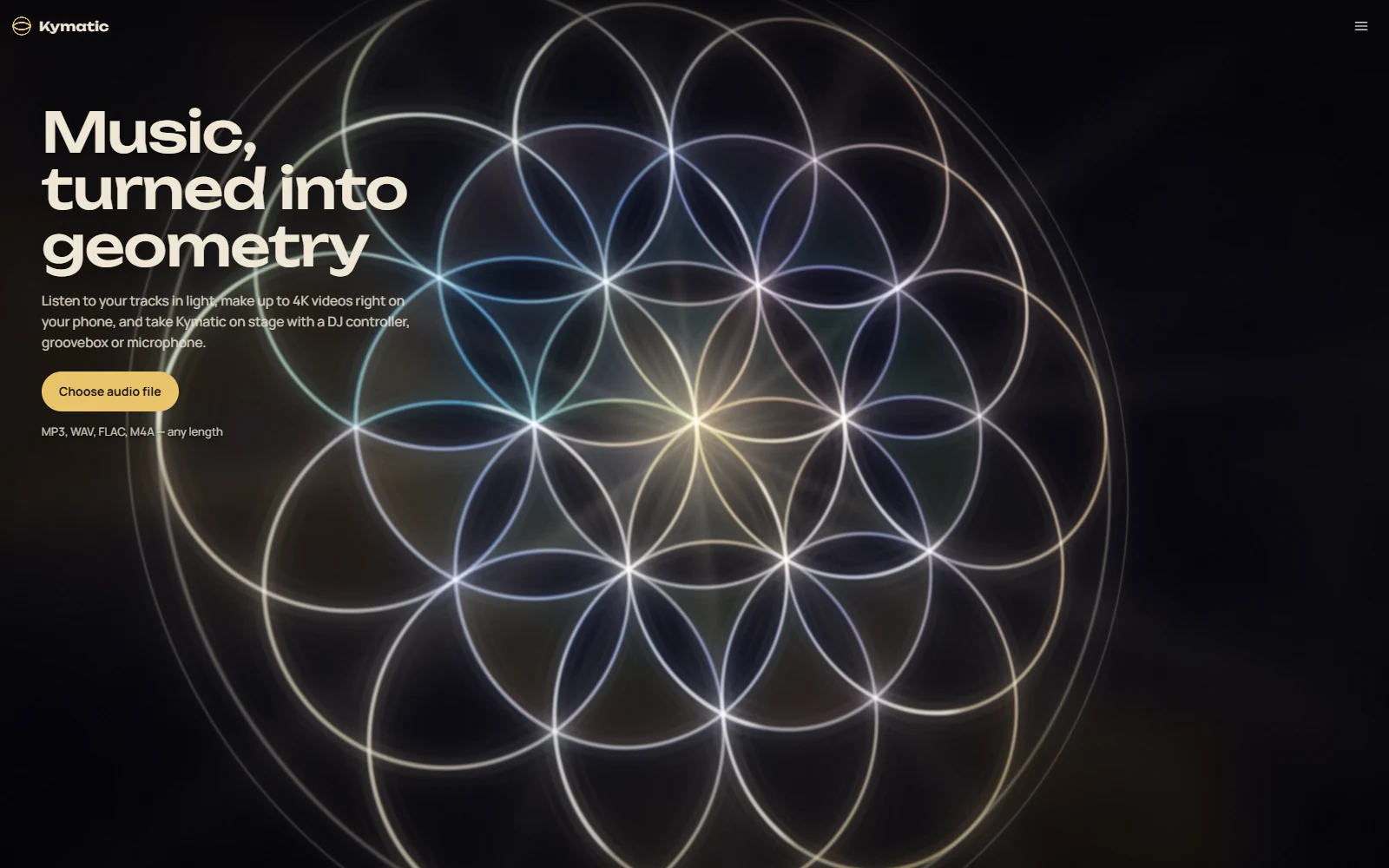
An online service that turns music into audio-reactive visuals. Musicians upload a track and get a video for a release or social media; DJs and live acts drive the same scenes from their gear on a projector or LED wall.
Problem
Every track needs a visual. Most musicians don’t have one.
Music is released on YouTube, SoundCloud and short-video platforms, and each of them expects moving pictures. For an independent artist that usually means a static cover, a generic template or paying a motion designer. DJs face the same gap twice: long recorded sets need video, and gigs need visuals on a screen.
A clip for a release or a short in minutes, made from the audio file they already have.
Visuals for a full set and for the stage, driven by a controller, groovebox or mixer.
Insight
The picture should be the shape the music draws.
The idea came from my own DJ sets: after a gig there was a 90-minute recording and nothing that showed how the room felt, the kick, the breakdown, the drop.
It met a long interest in how sound becomes form. Sand on a vibrating Chladni plate settles into a figure, and a higher note draws a more complex one. That set the product direction: not decoration over the music, but geometry that grows out of it.
Research
Many tools cover part of the job. None covers all of it.
Specterr, Videobolt, Renderforest. Spectrum bars and templates, rendered on a server, made for a three-minute single.
Freebeat, Neural Frames. The picture is invented rather than driven by the kick, and there is no stage mode.
Synesthesia, Magic Music Visuals, Resolume. Live-ready, but a laptop and real learning time; no clip from a phone.
Spectra, Ferromagnetic, STAELLA. Quick, but mostly particles or bars over a photo, rarely both export and stage.
One service that renders a full set on a phone, reacts to separate parts of the sound and takes the same scenes to a gig.
Listening
Four bands, and every scene listens differently.
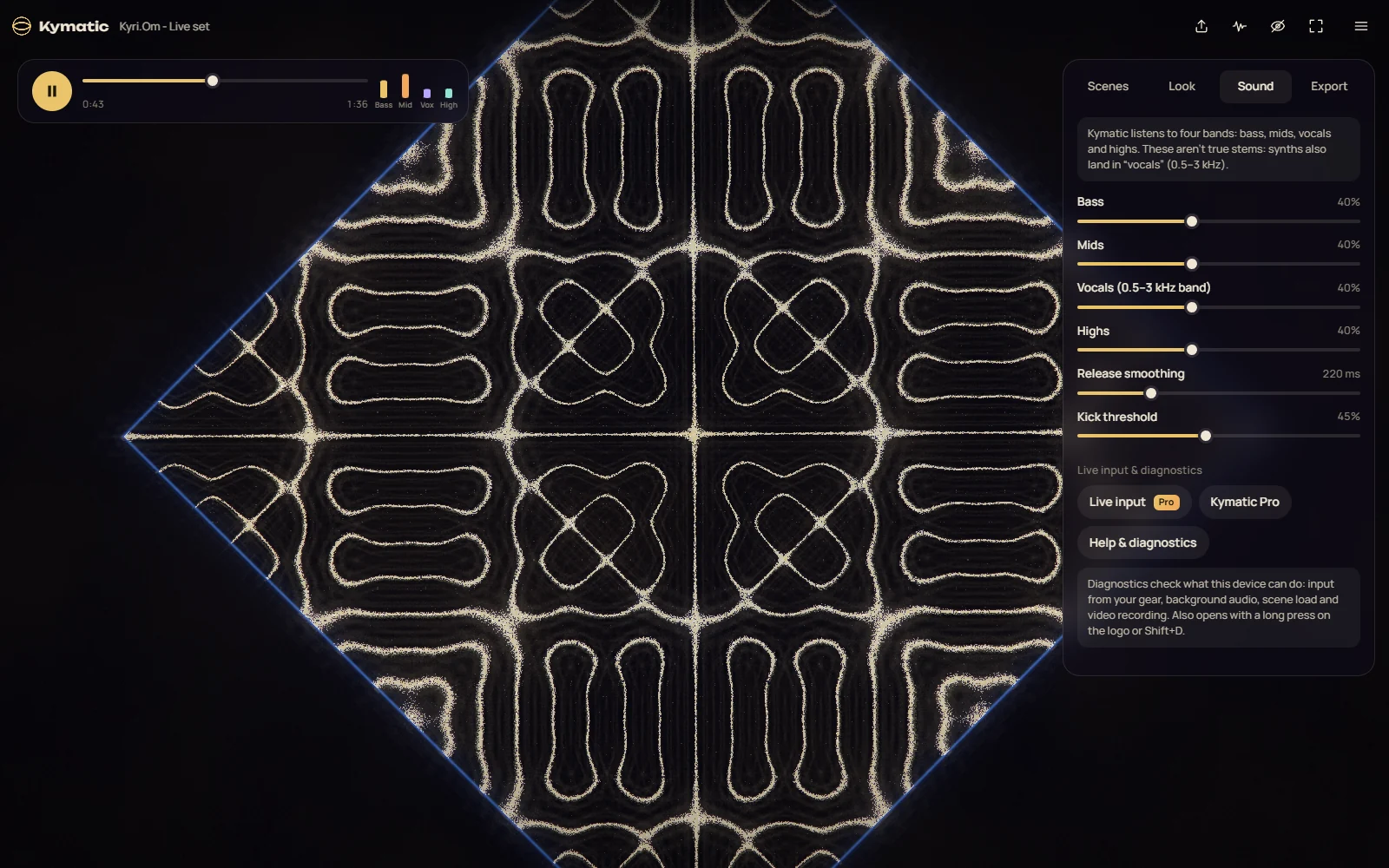
Kymatic hears bass, mids, vocals and highs, plus the kick and the energy of a section. Each scene decides which band moves which part of the picture, so the same track never looks the same twice.
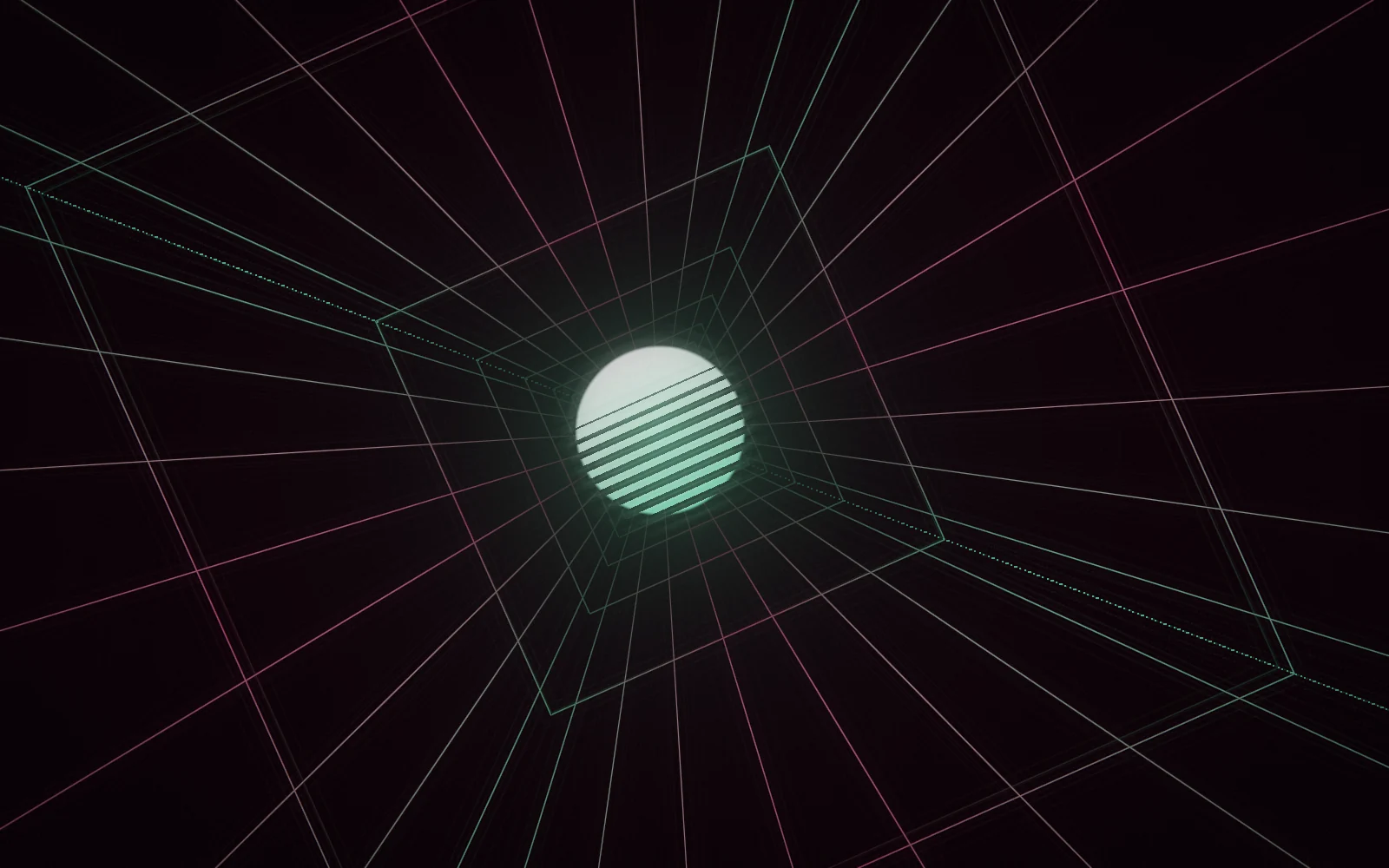
Bass widens the neon tubes, the kick sends light down the corridor, vocals shift the colour, highs make the floor glitter, energy sets the speed.
Mids and vocals push the plate into more complex figures, bass thickens the sand lines, highs make single grains sparkle.
Scenes
A library of 74 scenes, each tested on a full set.
The visual language starts from two references, a Chladni plate and the Flower of Life, and extends to the world of live shows: lasers, LED walls, tunnels and the night sky. The result is 12 families.
A scene stays in the library only if it holds attention for 20 minutes, moves visibly with at least three bands, reads on a phone and in a 9:16 crop, and runs on a projector without harsh flicker. Scenes that failed were replaced, and family names were written for users rather than for the team.
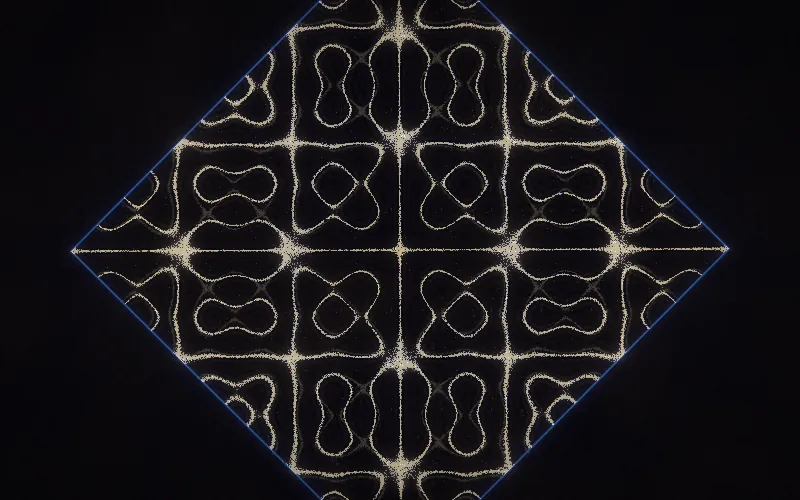

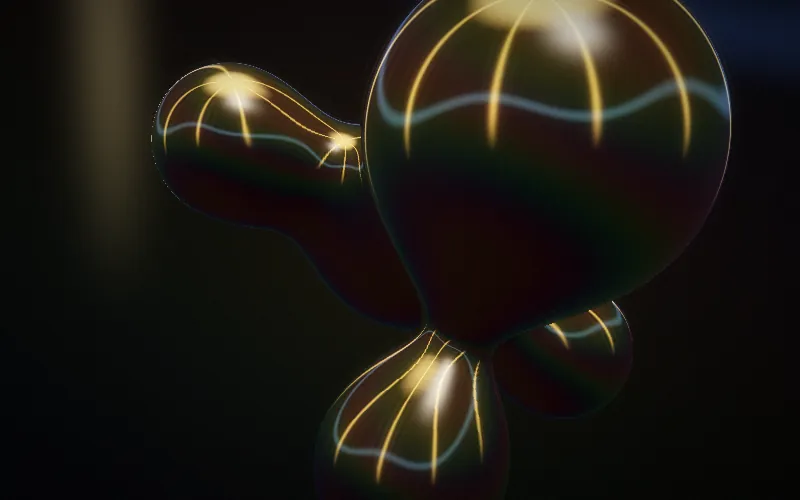
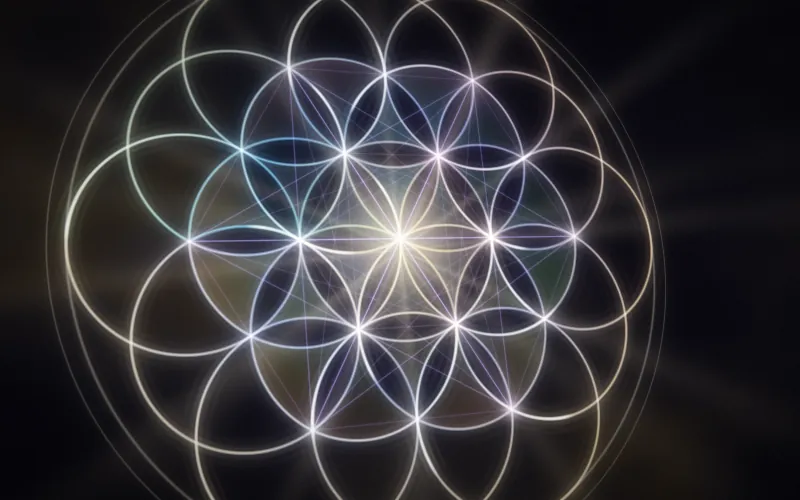
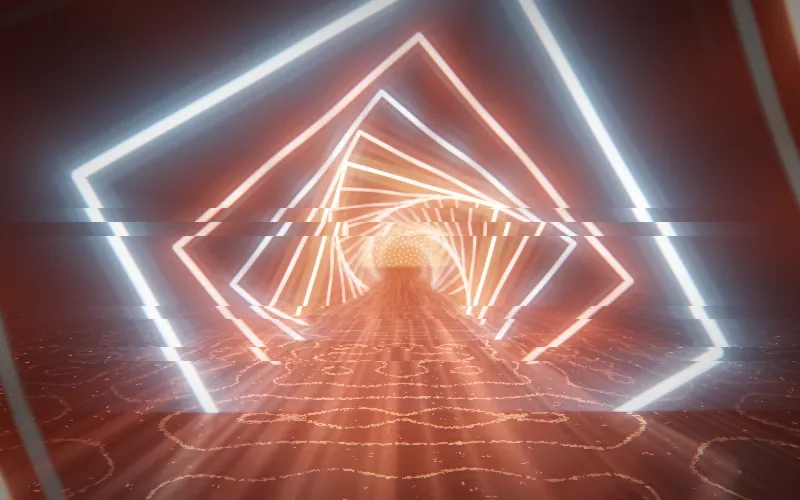
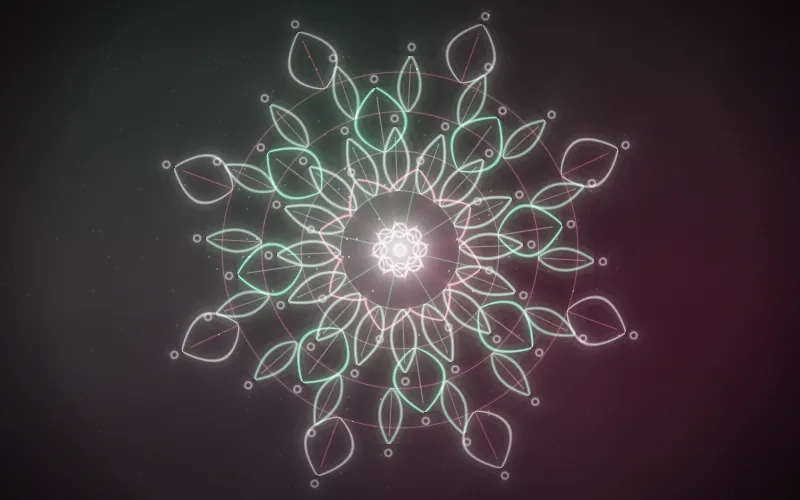
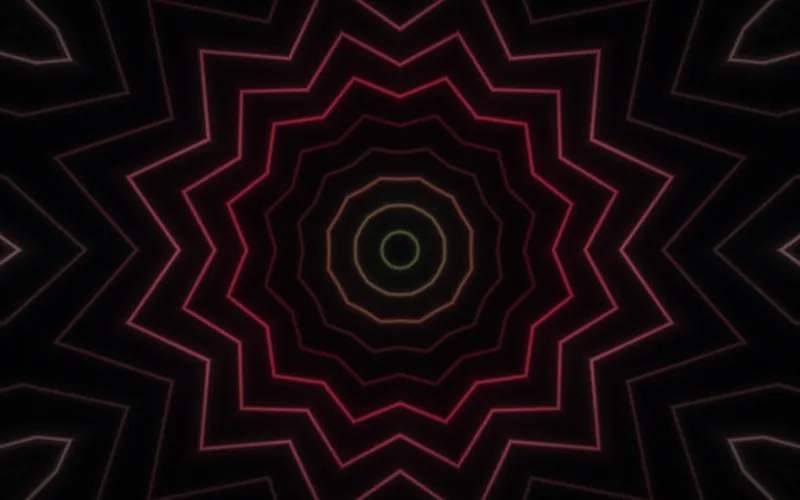
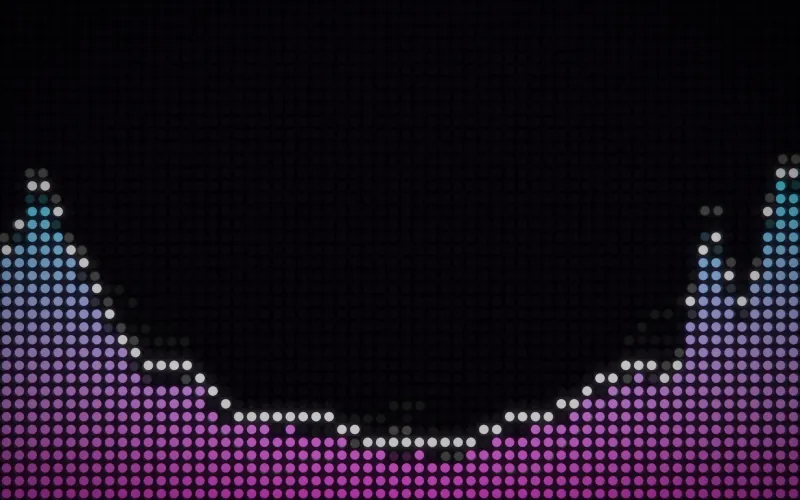
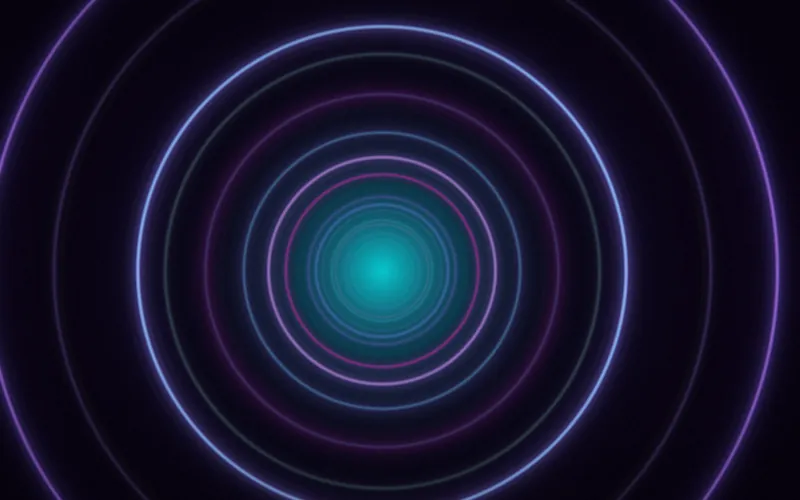

One frame each from ten families. Autopilot switches scenes on drops or every 16, 32 or 64 seconds.
Interface
One button, then the picture.
The first screen has a headline, one button and a menu; the player, panel and tools appear once music plays. From there everything lives in four tabs: Scenes, Look, Sound and Export. On a desktop the player sits in the top-left corner, clear of the picture; on a phone the player and tabs sit at the bottom, a swipe changes the scene and a tap hides the panels.
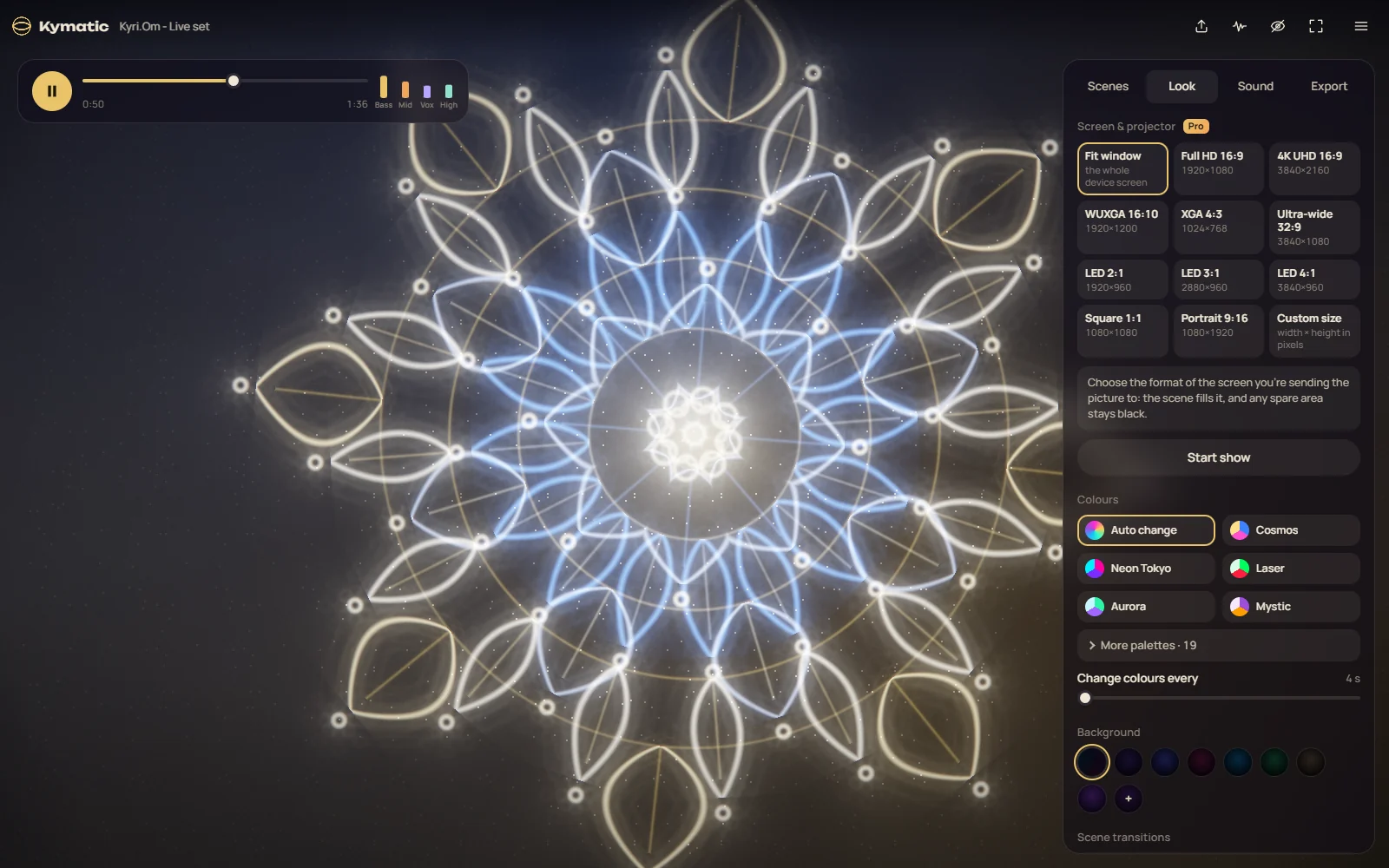
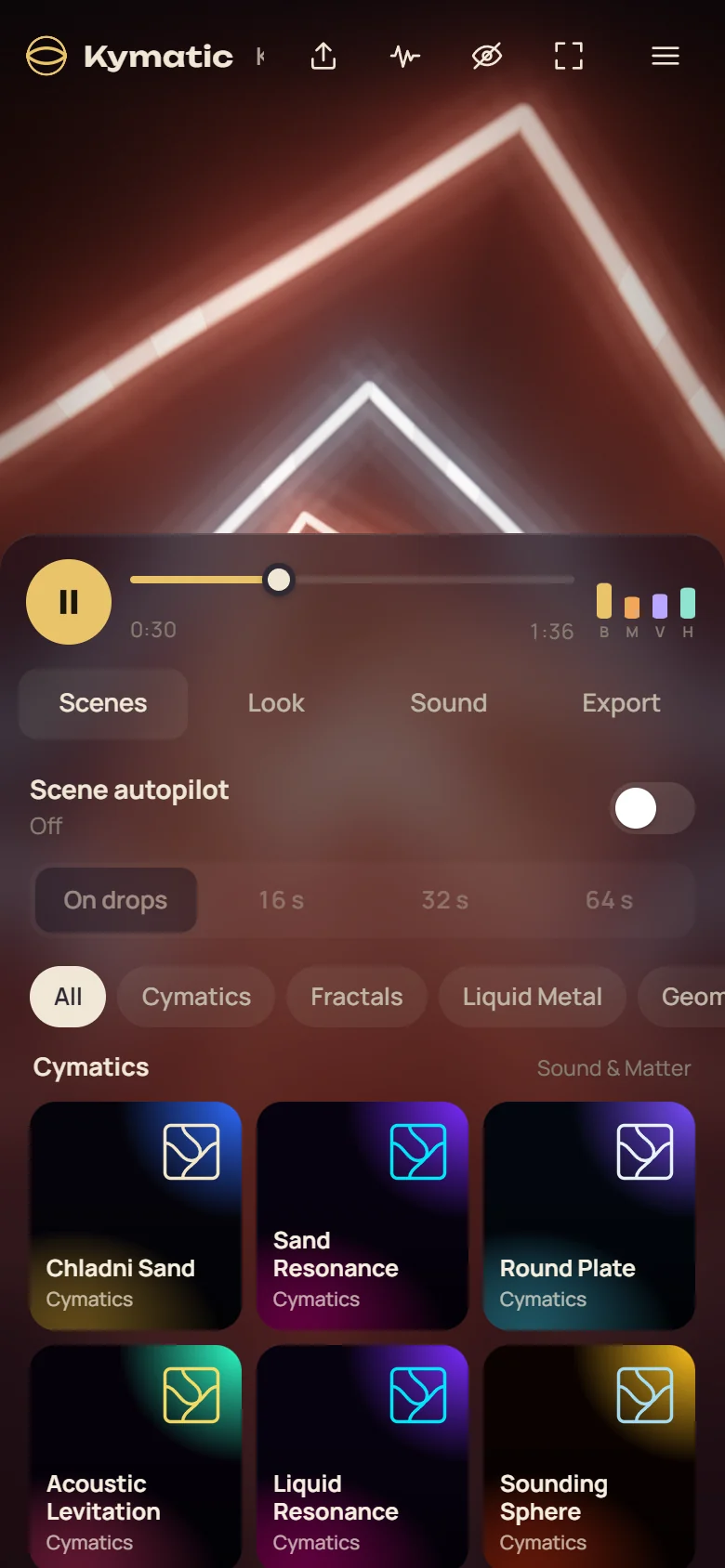
Scenes · autopilot, families, library.
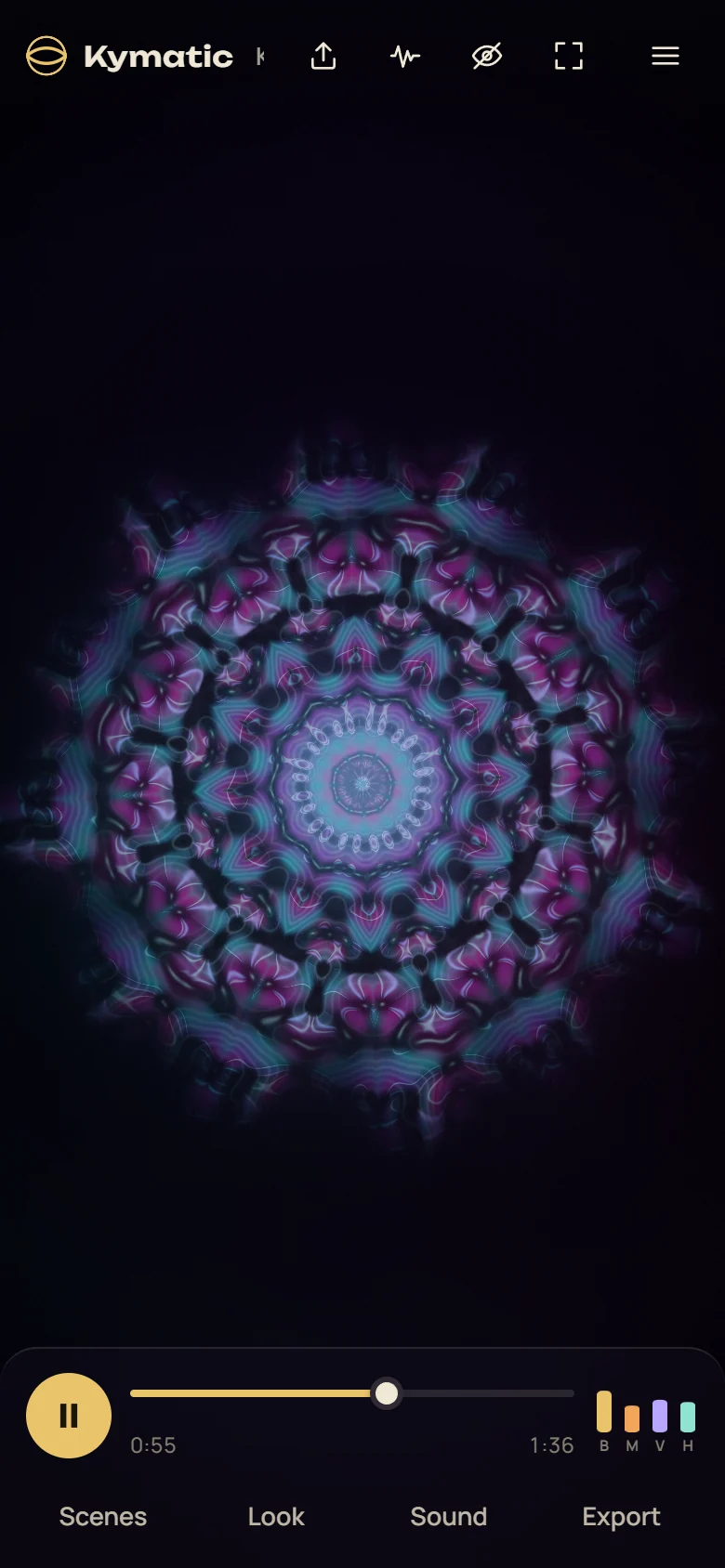
Playing · player and tabs below.
Export
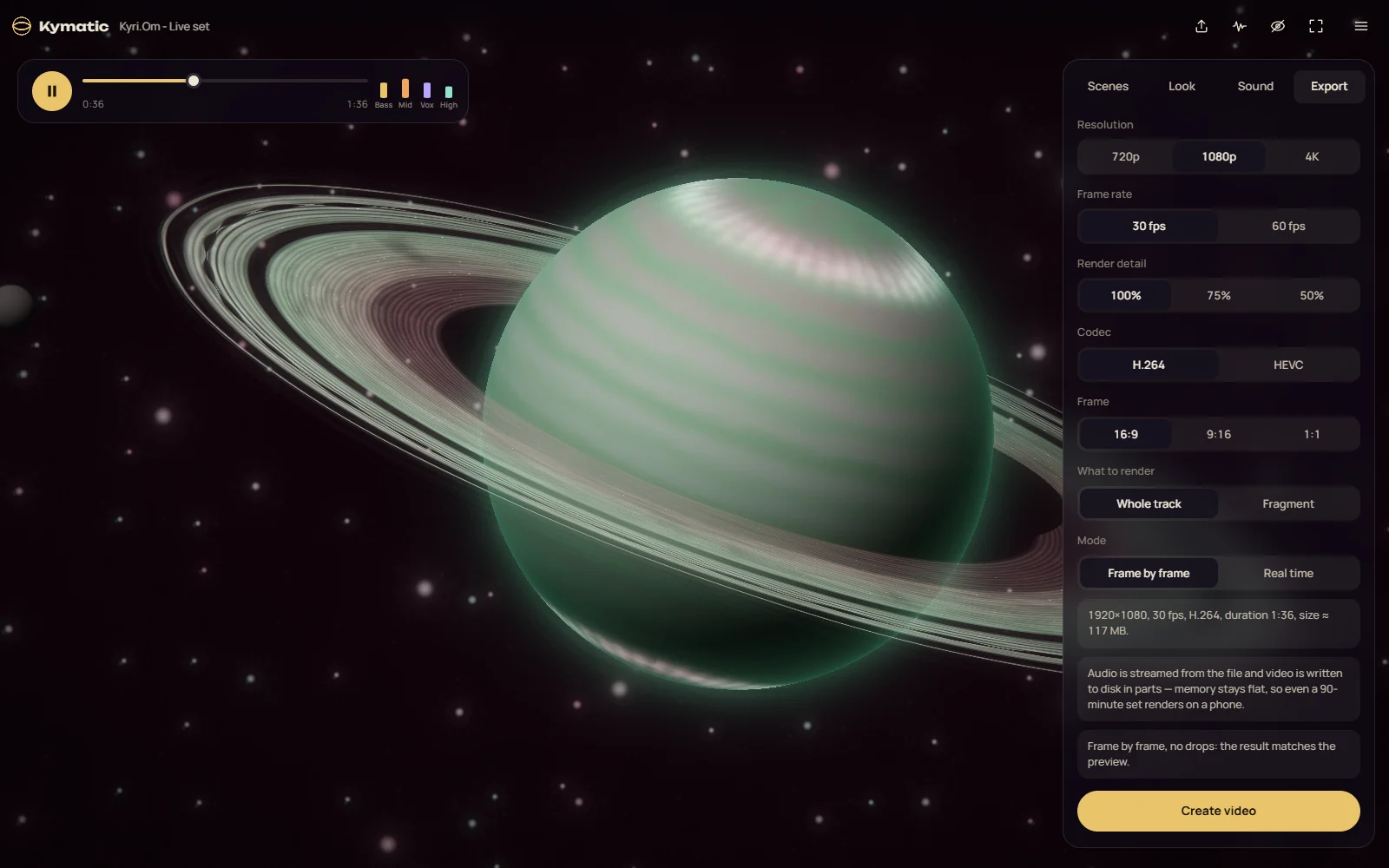
Release-ready video, straight from a phone.
720p to 4K, 30 or 60 fps, H.264 or HEVC, 16:9, 9:16 or 1:1, the whole track or a fragment. Audio streams from the file and video is written to disk in parts, so even a long set renders on a phone.
Live
From a phone screen to an LED wall.
Kymatic listens to a DJ controller, groovebox or mixer through a cable or microphone and sends the picture to a projector or LED screen in its native format. A silence gate stops it from amplifying noise, and built-in diagnostics check the setup before the show. Live input and screen output are part of Kymatic Pro.
Roadmap
From launch to a growing creative platform.
Public release as an online service, supported by a marketing campaign aimed at independent musicians, producers and DJs.
Collaborations with artists who use Kymatic for their releases and shows, turning their work into showcases for the service.
In-product feedback, behaviour analytics and usability sessions show where people hesitate, so onboarding, export and scene choice keep improving.
Streaming integrations starting with SoundCloud, new scene families, more languages and a richer Pro tier for live performers.